Which filament is better for 3D printing? PETG vs. PLA.
PETG and PLA filaments are thermoplastics. They are the most important filaments in the world of 3D printing.
PLA, or Polylactic Acid, is biodegradable. It is a material known for being very simple to print thanks to its low printing and bed temperature requirements.
PETG, or Polyethylene Terephthalate Glycol, is an oil-based polymer; it is not biodegradable like PLA. This material is stronger and has better layer adhesion.
Both materials, PLA vs PETG, are known for being easy to print, and they can be used by beginners and 3D experts alike.
Characteristics these filaments share:
- They are the most widely used because they are easy to print.
- They belong to the polyester plastics group; they are thermoplastics.
- Available in 1.75 mm and 2.85 mm diameters.
- Neither material requires an enclosed chamber
- Both materials can be printed on an open printer.
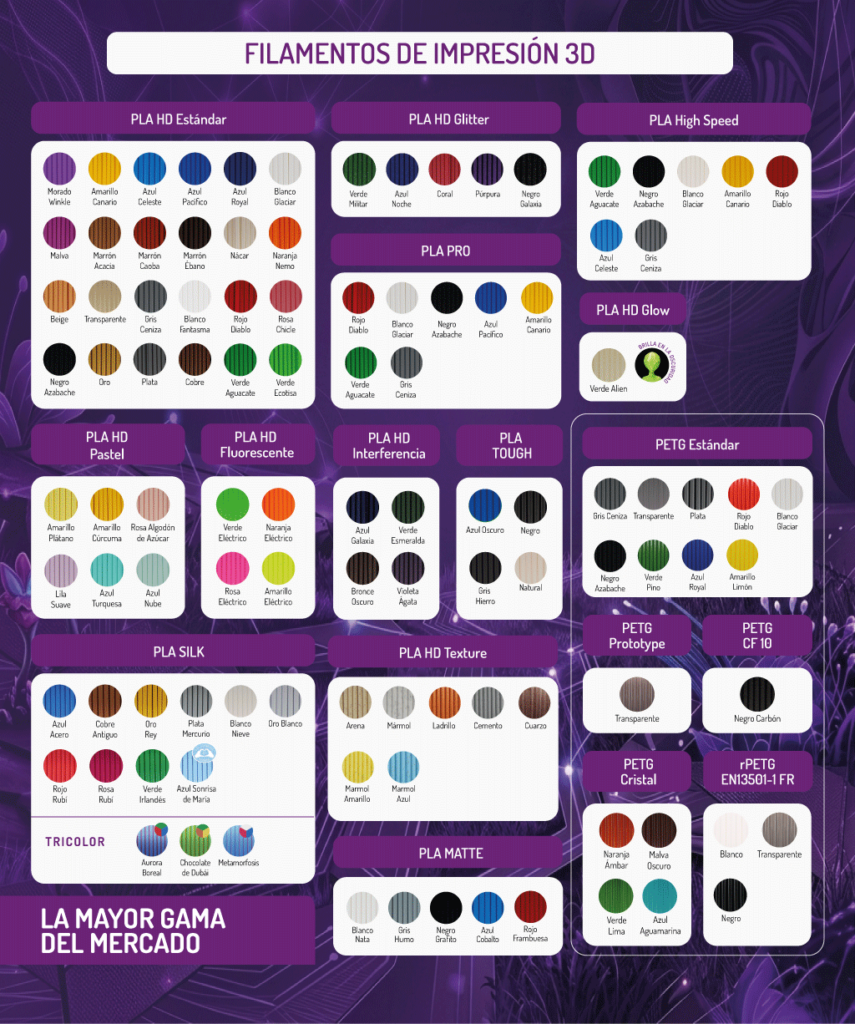
- At Winkle we have them available in a wide range of colours.
Let’s compare them and give you recommendations to help you choose between PETG and PLA.
Step into the world of 3D filaments with Winkle!
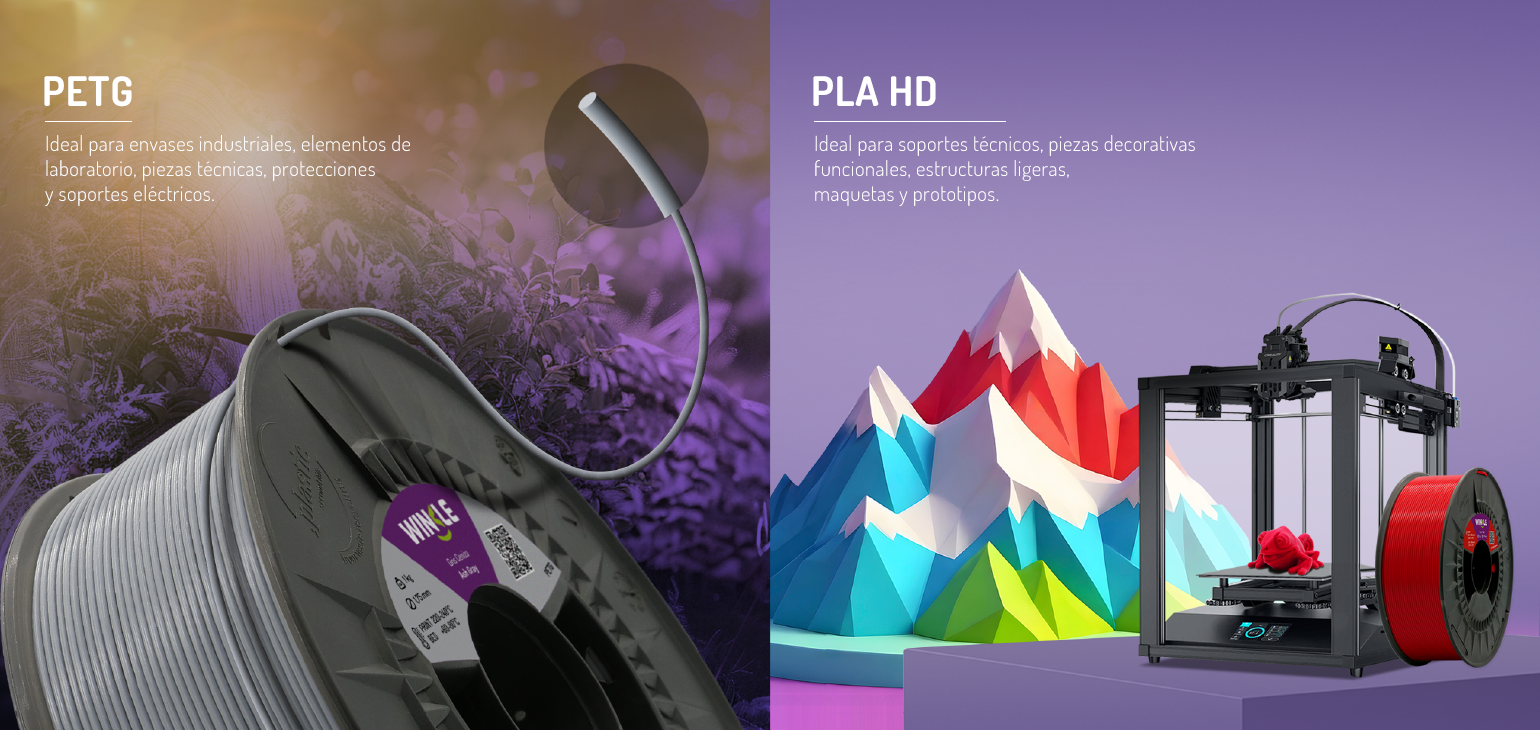
PLA or PETG? Choose according to your project
PLA is usually the best option for prototypes, decorative pieces and clean finishes (easy to print and stable).
PETG is better when you need functional parts with greater impact resistance, better heat resistance and longer durability (although it needs more tuning).
Rule of thumb: PLA = easy and good-looking vs PETG = functional and tough.
| What do you need? | Recommendation | Why |
|---|---|---|
| Easy printing (no hassle) | PLA | More stable, less warping and quick results with a good finish. |
| Visual prototypes / models / decoration | PLA | Better detail and appearance; ideal for parts that will not be under stress. |
| Functional parts (brackets, mechanical parts) | PETG | Tougher: better resistance to impact and daily use. |
| Outdoor use or “harsh” environments | PETG | Copes better than PLA with temperature, moisture and chemicals. |
| Heat resistance (parts near heat sources) | PETG | It withstands higher temperatures than PLA before deforming. |
| Maximum “clean” finish (less stringing) | PLA | It tends to produce less stringing and is more forgiving with standard profiles. |
| Good strength + good looks (balance) | PETG | A very good finish and generally better functional performance than PLA. |
PLA vs PETG in real life: extreme impact test
Is PETG really stronger than PLA? In this video we show you the qualities, applications and characteristics of Winkle’s PLA and PETG.
PETG vs. PLA materials
Which material is better for printing: PETG or PLA?
PETG composition
PETG is a variant of PET (Polyethylene Terephthalate), a polymer commonly used in plastic bottles and other packaging. ➡︎Adding glycol during manufacture improves the material’s durability and impact resistance, as well as reducing its brittleness.
- Base material: polyethylene terephthalate.
- Main additive: glycol, which improves impact resistance and makes processing easier.
- Manufacturing process: filament extrusion with added glycol to modify the mechanical and thermal properties.
PLA composition
PLA is a polymer derived from renewable resources such as corn starch or sugar cane. Additives are included to increase its mechanical and thermal resistance.
- Base material: polylactic acid, a biodegradable polymer.
- Additives: improved nucleating agents and plasticisers to enhance durability and flexibility.
- Manufacturing process: polymerisation of lactic acid followed by extrusion with additives to increase strength.
PETG vs. PLA properties and characteristics
The key differences between PETG and PLA that will help you decide, on technical grounds, which material fits your 3D project best.
Bear in mind that at Winkle we also have other types of filament for 3D printers.
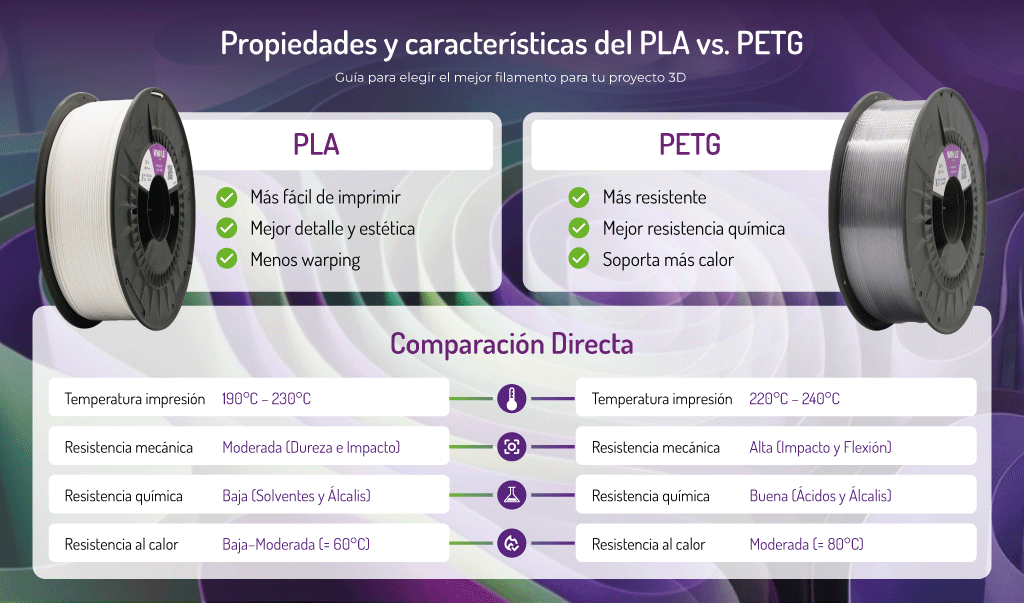
PETG properties

PETG filament is known for its excellent combination of physical and chemical properties, which makes it very versatile.
- Printing temperature: between 220 °C and 240 °C.
- Bed temperature: between 60 °C and 80 °C.
- Medium-to-high mechanical strength, good impact resistance and a degree of flexibility before breaking.
- Chemical resistance: good, it holds up well against acids and alkalis.
- Heat resistance: moderate, it withstands up to 80 °C without deforming.
- Transparency: good, available in opaque, crystal and transparent versions.
PLA properties
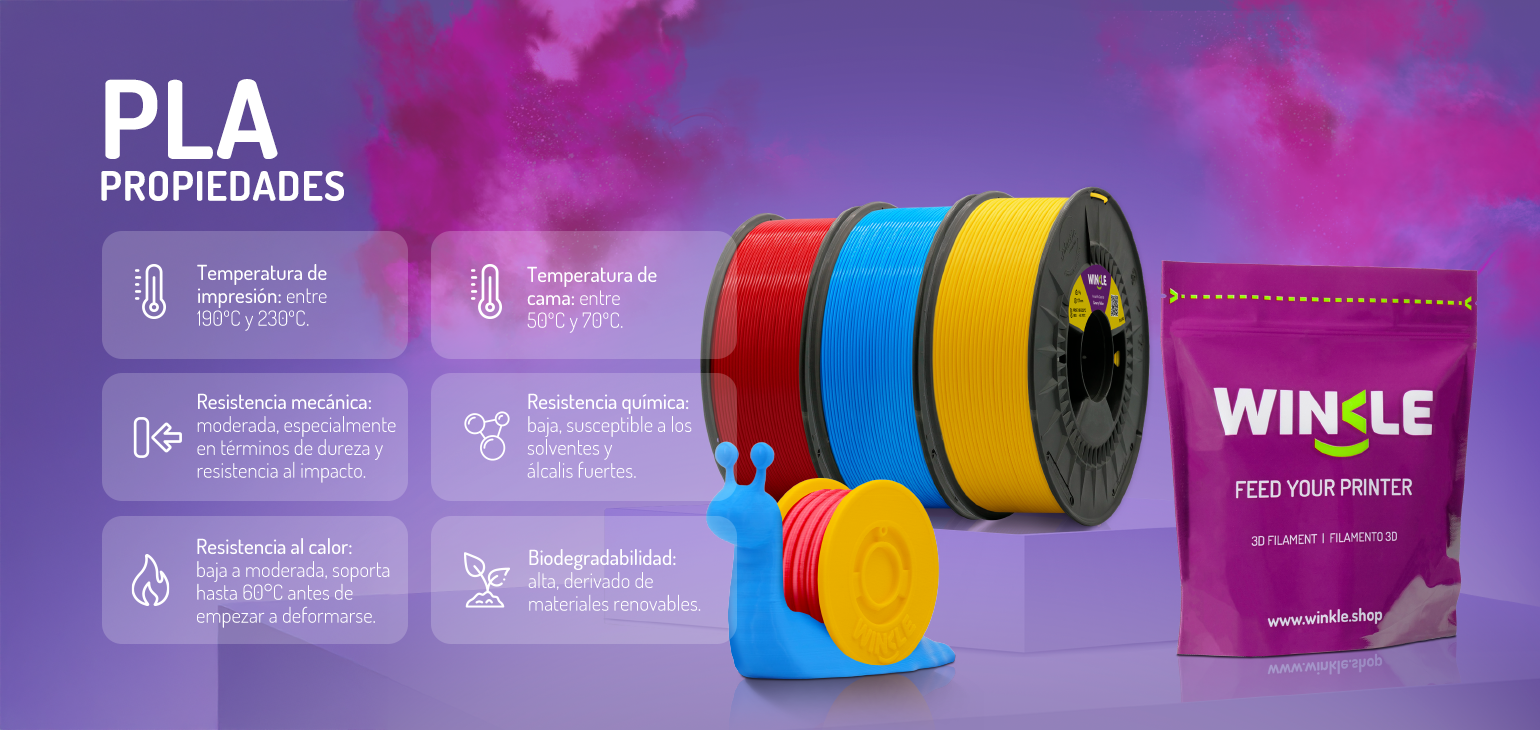
PLA stands out for being easy to print. It is the most popular filament on the market for decorative or display pieces.
- Printing temperature: between 190 °C and 230 °C.
- Bed temperature: between 50 °C and 70 °C.
- Mechanical strength: moderate, particularly in terms of hardness and impact resistance.
- Chemical resistance: low, susceptible to solvents and strong alkalis.
- Heat resistance: low to moderate, it withstands up to 60 °C before it starts to deform.
- Biodegradability: high, derived from renewable materials.
PETG vs PLA applications and uses
PETG has greater chemical resistance than PLA, so it copes better with contact with detergents, household cleaners and oils without degrading.
In addition, PETG offers better resistance to UV radiation, so it degrades more slowly when exposed to the sun. Even so, neither PLA nor PETG is ideal for prolonged outdoor use without UV stabilising additives.
Both materials can absorb moisture from the air, which can affect the quality of the material over time. However, PETG is less sensitive to moisture during use, holding on to its mechanical properties and stability better across different environmental conditions.
PETG applications
- PETG is ideal for rapid prototyping and manufacturing tools and accessories, allowing efficient design validation and optimisation of production processes before final materials are used.
- PETG is better suited to parts that require greater strength than PLA
- PETG is used for outdoor parts and those that need to be tougher.
- PETG is ideal for parts that need to withstand chemicals.
- PETG is widely used in applications that call for durable, impact-resistant parts. Some of its applications include:
- Packaging and bottles: its chemical resistance and transparency make it suitable for containers and chemical products.
- Functional prototypes: useful for creating prototypes that have to be handled and physically tested.
PLA applications
- PLA is better for detailed projects that can be post-processed.
- PLA is a better option than PETG where appearance is concerned. More complex, detailed parts can be printed.
- PLA is the most popular material on the 3D printing market and comes in a huge range of colours, variants and finishes.
- PLA is mainly used in projects where ease of printing and biodegradability are the priorities. Some common applications are:
- Visual prototypes: ideal for prototypes that will not be subject to severe mechanical loads and are intended for display.
- Educational material and toys: its safety and biodegradability make it suitable for products aimed at children and educational settings.
- Decorative pieces: thanks to its ease of printing, it is excellent for making attractive parts with good surface finishes.
Common problems with PLA and PETG and how to solve them
In our technical experience, most 3D printing failures are not related to the material itself, but to poor calibration or incorrect use for the type of part.
PETG:
- Problem: parts adhere poorly to the bed.
- Solution: adjust the heated bed, use a specific adhesive.
- Problem: PETG produces more stringing.
- Solution: dry the filament, adjust retraction, control the temperature, tweak the slicer settings and adjust the layer fan.
PLA:
- Problem: brittleness in functional parts.
- Solution: increase perimeters and infill when slicing. Also check that the filament is not damp.
- Problem: slight deformation at high temperatures.
- Solution: ensure adequate ventilation, or switch to PETG if the part will be exposed to heat.
Why stick with PLA instead of switching to PETG?
A very common question: if PETG is stronger, withstands more heat and the price difference is minimal… why not just use PETG?
If you mainly print functional parts, outdoor items or things exposed to heat: PETG makes more sense as your base material.
If you make decorative items, visual prototypes or fast, stable production runs: PLA is still extremely efficient.
It is not about which is better, but about what your part actually demands.
What PLA does better:
- Greater dimensional stability.
Less warping and fewer internal stresses. Ideal for parts with tight tolerances or for open printers. - Better definition.
It solidifies faster: cleaner edges, less stringing and a better visual finish. - Simpler to work with.
It needs fewer retraction and temperature adjustments. - A wider colour range: at Winkle we have a catalogue of more than 70 colours in PLA.
Still have questions about PETG vs. PLA filament? Read on!
 Which is easier to print, PETG or PLA?
As a general rule, PLA is easier to print thanks to its lower extrusion temperature and lower tendency to deform.
That said, PETG offers better layer adhesion and is less prone to deformation than ABS, although it may need some configuration tweaks to avoid stringing (fine threads of material).
Which is stronger, PETG or PLA?
PETG is generally stronger than PLA, especially in terms of impact and flexural resistance. This makes it better suited to functional parts and applications that require superior mechanical properties.
Which is better for outdoor applications, PETG or PLA?
PETG is better suited to outdoor applications thanks to its better resistance to the weather and to UV rays. PLA, while also durable, is more susceptible to degrading under prolonged exposure to sun and moisture.
Are both materials safe for food contact?
PETG is generally considered safe for food contact, especially when using filament certified for that purpose. PLA can also be safe for food contact, but this depends on the additives used in its manufacture and on the specific certification of the filament.
Both PETG and PLA offer unique advantages in 3D printing, and the choice between them depends on the specific needs of your project. PETG is ideal for applications that require high mechanical and chemical resistance, while PLA is excellent for projects that value ease of printing and biodegradability.