
New Bright Purple PLA HD Filament
New Glitter Purple PLA HD Filament: New to our filament collection for this new school year at Winkle! Welcome to the vibrant Glitter Purple color!
Read more →
Winkle 2019: A year of change and passion for 3D Printing.
2019 is coming to an end, a year of great changes for Winkle, in which we have changed our image to show the type of company we really are, an innovative, creative and cool company. But we have not only had changes in our image, but we have not stopped researching to offer new 3D […]
Read more →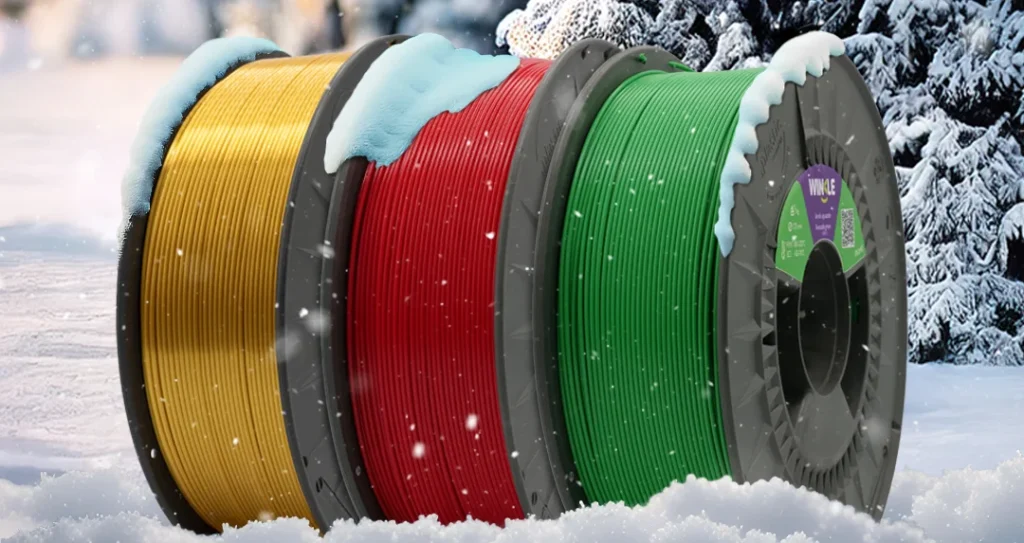
Give the gift of 3D Printing at Christmas
At Christmas, everything is filled with laughter and joy. Colours, sparkles and imagination fill everything. At this special time of year, we can take advantage of the opportunity to make different Christmas decorations and gifts with a 3D printer and some tightly wound filaments. Give 3D printing this Christmas!
Read more →
New PLA Wood material
New PLA Wood material! September is a month of welcome and new beginnings. And as we have been warning, it is a month of many new things at Winkle. We present our NEW WOOD RANGE! 💥
Read more →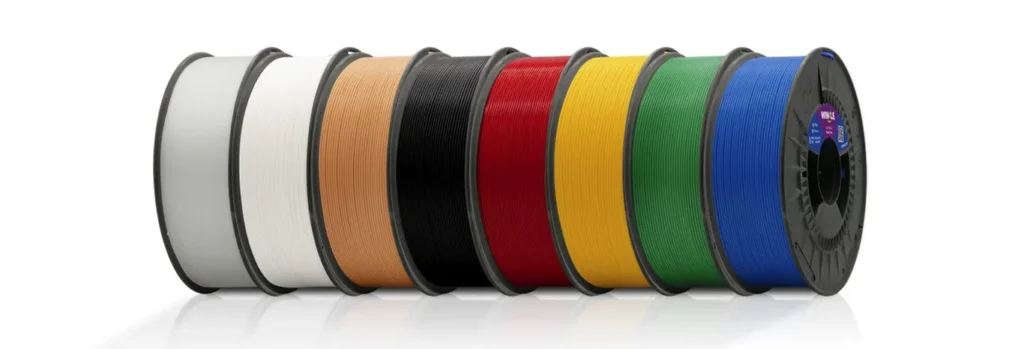
Buy 3D Filaments in Salamanca
This text announces the opening of two new physical points of sale to buy 3D filaments in Salamanca. One is located inside the Eleclerc supermarket and the other is a Pop-up store on the ground floor of the El Tormes shopping centre. These points of sale are thanks to Mi Pequeña Fábrica, from Grupo Ecotisa, […]
Read more →
3D Printing: What are the possible uses?
3D printing has multiple uses in everyday life. It allows for the production of complex designs, the creation of rapid prototypes and the use of various materials for professional finishes. In sectors such as medicine, it is used to create surgical guides, prostheses, bone reconstructions and immobilization elements. Research in this field is advancing rapidly, […]
Read more →