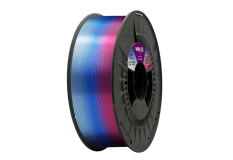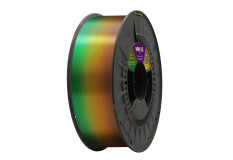
Filamento PLA Silk Tricolor Winkle 1.75 mm 1kg - CHOCOLATE DE DUBAI
🔥Gastos de envío GRATIS a partir de 80€ ¡Comprar ahora!
PLA
Fácil de imprimir, estable y con acabados limpios. Ideal para prototipos, piezas decorativas, maquetas y productos finales donde prima el detalle visual. Ofrece excelente definición, mínima deformación y compatibilidad con la mayoría de impresoras 3D. Es el filamento perfecto si buscas resultados fiables desde la primera capa.
Filamento PLA Silk Tricolor Winkle 1.75 mm 1kg - METAMORPHOSIS
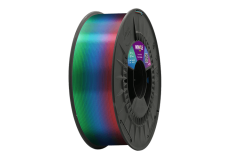
Filamento PLA Silk Tricolor Winkle 1.75 mm 1kg - AURORA BOREAL
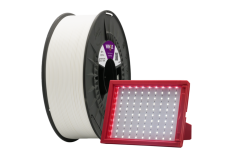
Filamento PLA HD Pastel Winkle - Amarillo Curcuma
Filamento PLA HD Pastel Winkle - Amarillo Platano
Filamento PLA HD Pastel Winkle - Azul Nube
Filamento PLA HD Pastel Winkle - Azul Turquesa
Filamento PLA HD Pastel Winkle - Lila Suave
-
Entregas en 48/72 horas
-
Calidad garantizada
-
Envío GRATIS
en compras superiores a 80€ -
100% Pagos seguros
-
PLA filament is one of the most widely used materials in FDM and FFF 3D printing. Known for its reliability and ease of printing, PLA is commonly used in desktop 3D printers, professional prototyping, and educational environments.
PLA stands for polylactic acid, a bio-based thermoplastic produced from renewable resources such as corn starch or sugarcane. Because of its low printing temperature, minimal warping, and excellent surface finish, PLA filament is often considered the standard material for 3D printer filament beginners and professionals alike.
In this category you will find different types of PLA filament for 3D printers, including standard PLA, silk PLA, HD PLA, and other specialized variants designed for different printing needs.
What Is PLA Filament?
PLA filament is a thermoplastic material designed for fused deposition modeling (FDM) 3D printing. During the printing process, the filament is heated in the printer’s hotend and extruded layer by layer to build a three-dimensional object.
Compared with many other 3D printing filaments, PLA prints at relatively low temperatures and produces minimal fumes, which makes it a popular choice for home and office environments.
PLA is also widely used outside additive manufacturing in applications such as packaging, medical components, and textiles because it is derived from renewable materials and is considered a more sustainable plastic compared to many petroleum-based polymers.
Key Properties of PLA Filament
PLA filament is valued for its balanced performance and ease of use. The following characteristics define the typical behavior of PLA 3D printer filament.
- Low Printing Temperature: PLA filament usually prints at nozzle temperatures between 190 °C and 220 °C, which is significantly lower than materials such as ABS or Nylon. A heated bed is often optional, but temperatures around 50–60 °C can improve adhesion and print consistency.
- Minimal Warping: PLA exhibits very low shrinkage during cooling, which means it is less prone to warping compared to many engineering plastics. This property makes it especially suitable for desktop 3D printers and beginners.
- High Surface Quality: One of the main advantages of PLA filament is the ability to produce smooth surfaces and detailed prints, making it ideal for prototypes, models, and decorative objects.
- Bio-Based Material: PLA plastic filament is produced from renewable plant resources, which contributes to its reputation as a more environmentally friendly 3D printing material.
Types of PLA Filament
PLA filament is available in several variants designed for different visual effects and mechanical properties.
- Standard PLA Filament: Standard PLA is the most common 3D printing filament for general-purpose printing. It offers excellent compatibility with most 3D printers and is ideal for prototypes, models, and educational projects.
- Silk PLA Filament: Silk PLA is designed to produce glossy and smooth surface finishes. It is commonly used for decorative prints and aesthetic models.
- Recycled PLA Filament: Recycled PLA filament is manufactured using recycled PLA material. These products aim to reduce plastic waste while maintaining compatibility with standard PLA 3D printing settings.
Applications of PLA 3D Printing Filament
PLA filament is widely used across many sectors due to its accessibility and reliable print quality.
Common applications include:
- Rapid prototyping
- Product design models
- Educational projects
- Decorative prints and figurines
- Concept models and architectural designs
Because PLA is easy to print and produces clean results, it is often the first material used by beginners learning 3D printing.
When to Choose PLA Filament
PLA filament is a strong choice when:
- You need easy and reliable printing.
- The project focuses on visual quality and precision
- The printed parts are not exposed to high temperatures
However, PLA may not be ideal for applications requiring high heat resistance or significant mechanical stress, as its thermal resistance is typically around 60–65 °C.
PLA Filament Compared to Other 3D Printing Materials
PLA is often compared with other common 3D printing materials such as PETG and ABS. PLA remains the most accessible and widely used filament because it combines simple printing settings with consistent results.
Choosing the Right PLA Filament for Your 3D Printer
When selecting PLA filament for a 3D printer, it is important to consider:
- Filament diameter (usually 1.75 mm).
- Recommended printing temperature.
- Compatibility with your printer model.
- Intended application of the printed part.
Different manufacturers may adjust the polymer blend or additives in PLA, which means that printing behavior can vary slightly between brands.