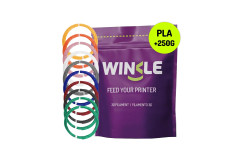
- New
🔥FREE shipping on orders of €80 or more ¡Buy Now!





 0
0
 There are no items in your cart
Browse our store and discover our product catalog.
Continue shopping
There are no items in your cart
Browse our store and discover our product catalog.
Continue shopping
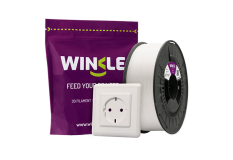
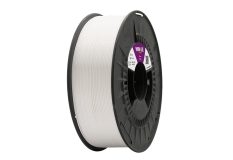
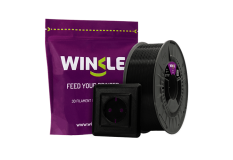

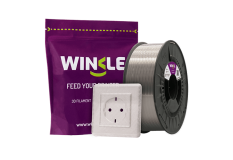

rPETG EN13501-1 FR Winkle Filament - Transparent
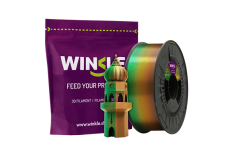
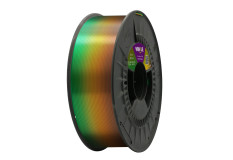
PLA Silk Multicolor Winkle Filament - DUBAI CHOCOLATE
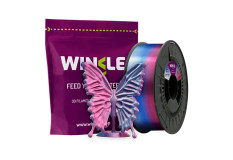
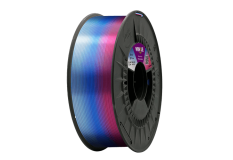
PLA Silk Multicolor Winkle Filament - METAMORPHOSIS
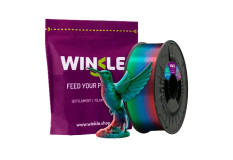
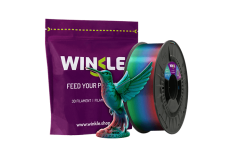
PLA Silk Multicolor Winkle Filament - AURORA BOREALIS
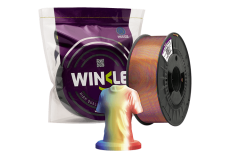
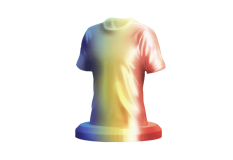
PLA Silk Multicolor Winkle Filament - COLOMBIA
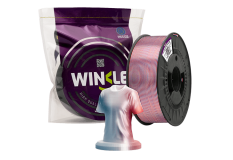
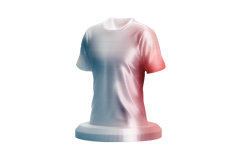
PLA Silk Multicolor Winkle Filament - FRANCIA, PAISES BAJOS, EEUU
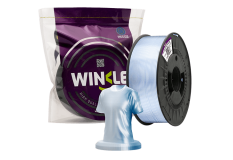
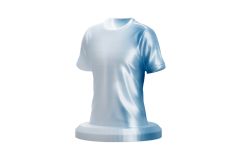
PLA Silk Multicolor Winkle Filament - ARGENTINA
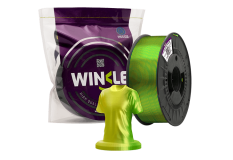
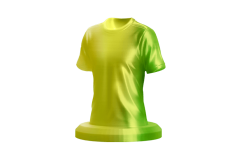
PLA Silk Multicolor Winkle Filament - Yellow-Green
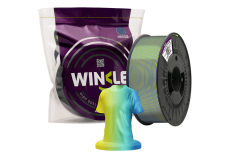
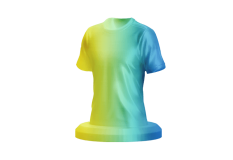
PLA Silk Multicolor Winkle Filament - SUECIA, UCRANIA
 Deliveries in 48/72 hours
 Guaranteed quality
 FREE Shipping
  100% Secure payments



3D printer filament is the essential material used in FDM and FFF 3D printing, where thermoplastic filament is heated in the printer’s hotend and extruded through a nozzle to build objects layer by layer from a digital model. Most filaments are supplied in spools with a 1.75 mm diameter, the standard size used in many desktop 3D printers.
Different types of 3D printing filament are designed to meet specific printing needs. Some materials prioritize ease of use and consistent printing, while others focus on durability, flexibility, or resistance to heat and chemicals for more demanding applications.
In this category you will find a range of filament for 3D printers, including popular materials such as PLA filament, PETG filament, ABS filament, ASA filament, flexible filament, recycled filament, and polypropylene filament, allowing you to choose the most suitable material for each type of 3D printing project.
When selecting filament for a 3D printer, several factors should be considered:
Understanding the characteristics of each 3D printer filament helps ensure reliable printing results and optimal performance. Several materials are commonly used in FDM 3D printing.
PLA filament is one of the most popular materials for 3D printing. It is easy to print, requires relatively low temperatures, and produces detailed prints.
PETG filament offers strong mechanical properties and good durability while remaining relatively easy to print.
ABS filament is widely used for functional parts that require strength and heat resistance.
ASA filament is designed for outdoor applications, providing strong resistance to UV radiation and weather conditions.
Flexible filaments used to produce elastic and flexible parts like phone cases or seals.
Polypropylene filament is a lightweight material known for its chemical resistance and flexibility.
Choosing the correct 3D printing filament is essential for achieving the desired print quality and mechanical performance.
Different filaments provide different mechanical and printing characteristics.
| Material | Ease of printing | Mechanical resistance | Thermal resistance | Flexibility | Typical applications |
|---|---|---|---|---|---|
| PLA | Very easy | Media | Download | No | Prototyping, decoration, educational use, interior parts |
| PETG | Media | High | Media | Slightly | Functional parts, housings, moderately stressed components |
| ABS | Difficult (requires enclosure) | High | High | No | Industrial use, automotive, technical parts subjected to temperature and stress |
| ASA | Difficult (requires enclosure) | High | High | No | Outdoor parts, components exposed to sun/UV and weather conditions |
| Polypropylene (PP) | Medium-difficult | High | Media | Media | Chemically resistant parts, containers, live hinges, technical components |
| Recycled filament | Easy-medium (depending on base) | Media | Low-medium | Depends on the base material | Sustainable projects, education, responsible prototyping |