

- Out-of-Stock
🔥FREE shipping on orders of €80 or more ¡Buy Now!





 0
0
 There are no items in your cart
Browse our store and discover our product catalog.
Continue shopping
There are no items in your cart
Browse our store and discover our product catalog.
Continue shopping
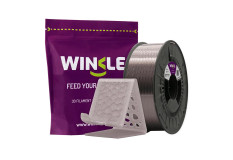
Focused on rapid prototyping and functional design validation. It allows you to print strong, stable parts that are representative of the final product, without complex timing or adjustments. Ideal for mechanical testing, assembly, and pre-production validation. It is the perfect filament for rapid iteration, fearless testing, and confident technical decision-making.
 Deliveries in 48/72 hours
 Guaranteed quality
 FREE Shipping
  100% Secure payments



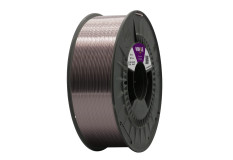
PETG Prototype is Winkle’s transparent PETG filament, designed for applications where visibility, light transmission, or internal inspection are important.
While it belongs to the PETG family, this material is specifically focused on producing clear or translucent parts, rather than just mechanical performance.
PETG is naturally capable of producing transparent finishes due to its amorphous structure, which allows light to pass through the material
At Winkle, PETG Prototype is optimized for::
Typical applications include:
It’s the right material when you need to see through the part, not just use it.
PETG Prototype is ideal when transparency or translucency adds value to the part, either visually or functionally.
Use PETG Prototype when:
Transparent PETG is commonly used in applications where both durability and optical clarity are needed, combining strength with visual functionality.
Avoid PETG Prototype when:
It’s also important to understand that transparency depends on print settings and part design. Thin walls and optimized extrusion can improve the visual result
Compared to PETG Standard, this material is:
Not completely. Most FDM prints are translucent rather than fully clear. Transparency depends on print settings, wall thickness, and extrusion quality.
It is used for parts where visibility matters, such as light diffusers, covers, fluid inspection components, and visual prototypes.
To improve transparency:
Choose it when your part requires light transmission, internal visibility, or a transparent finish, rather than purely mechanical performance.