

🔥FREE shipping on orders of €80 or more ¡Buy Now!





 0
0
 There are no items in your cart
Browse our store and discover our product catalog.
Continue shopping
There are no items in your cart
Browse our store and discover our product catalog.
Continue shopping
It combines mechanical strength, moderate flexibility, and ease of printing, without warping issues. It is used in supports, technical parts, lightweight mechanical components, and end products. It is the perfect filament if you need a reliable, durable, and easy-to-work material.
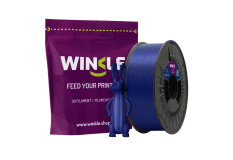
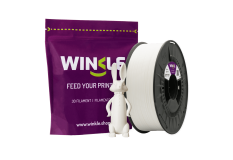
PETG Winkle Filament - Glacier White
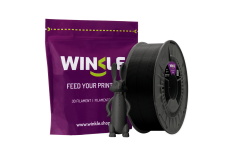
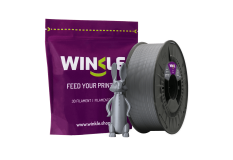
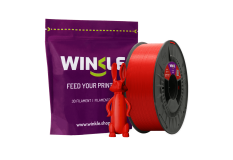
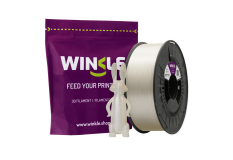
 Deliveries in 48/72 hours
 Guaranteed quality
 FREE Shipping
  100% Secure payments



PETG standard is a general-purpose 3D printing filament designed for users who need a reliable and versatile material without technical complexity.
It is part of the PETG family, a material widely used in 3D printing because it offers a balanced combination of strength, flexibility, and ease of printing. Compared to more advanced PETG variants, PETG standard focuses on consistent performance and usability rather than specialized properties.
At Winkle, PETG standard is intended for day-to-day printing, making it suitable for both beginners and professionals who need dependable results across different printers and applications.
Typical uses include:
It’s the material you choose when you want stronger results than PLA without increasing printing difficulty.
PETG standard is ideal for applications where parts need to be durable, slightly flexible, and resistant to everyday use conditions. It performs well in situations involving light mechanical stress, impact, or exposure to moisture.
Use PETG standard when:
PETG is commonly chosen for functional prints because it maintains structural integrity under load and resists moderate environmental exposure.
However, PETG Standard is not designed for:
In those cases, Winkle offers more specialized PETG materials tailored for demanding applications.
Stringing occurs when the filament continues to ooze during travel movements. PETG Standard is more prone to this than PLA due to its material behavior.
To reduce it:
Yes, a heated bed is highly recommended.
It improves first layer adhesion and ensures more stable prints. While PETG can stick to different surfaces, a heated bed provides more consistent results.
This is usually caused by poor first layer setup.
Common reasons include:
Fixing these factors will significantly improve adhesion.
PETG standard is the better option when you need:
PLA is easier to print, but PETG standard offers stronger and more practical results.