


- New
🔥FREE shipping on orders of €80 or more ¡Buy Now!





 0
0
 There are no items in your cart
Browse our store and discover our product catalog.
Continue shopping
There are no items in your cart
Browse our store and discover our product catalog.
Continue shopping
A balance between ease of printing and strength. Offers good flexibility, high impact resistance, and excellent interlayer adhesion. For functional parts, containers, supports, protective covers, and lightweight mechanical components. Prints without warping, with glossy finishes and high durability.


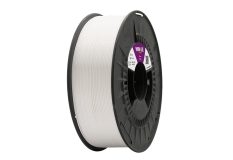
rPETG EN13501-1 FR Winkle Filament - Transparent




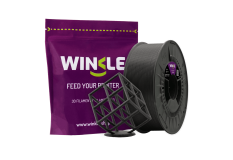
Winkle Carbon Fiber PETG Filament - Carbon Black

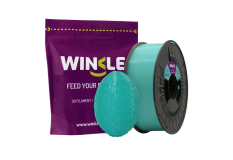
PETG Filament Crystal Winkle - Aquamarine blue

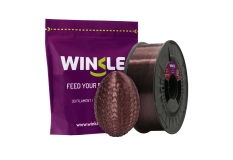
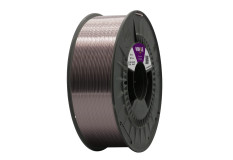
PETG Filament Crystal Winkle - Deep Mauve

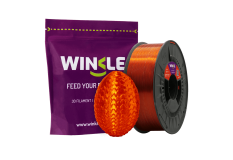

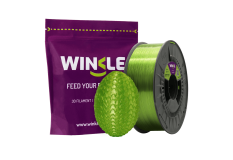


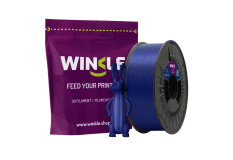
 Deliveries in 48/72 hours
 Guaranteed quality
 FREE Shipping
  100% Secure payments


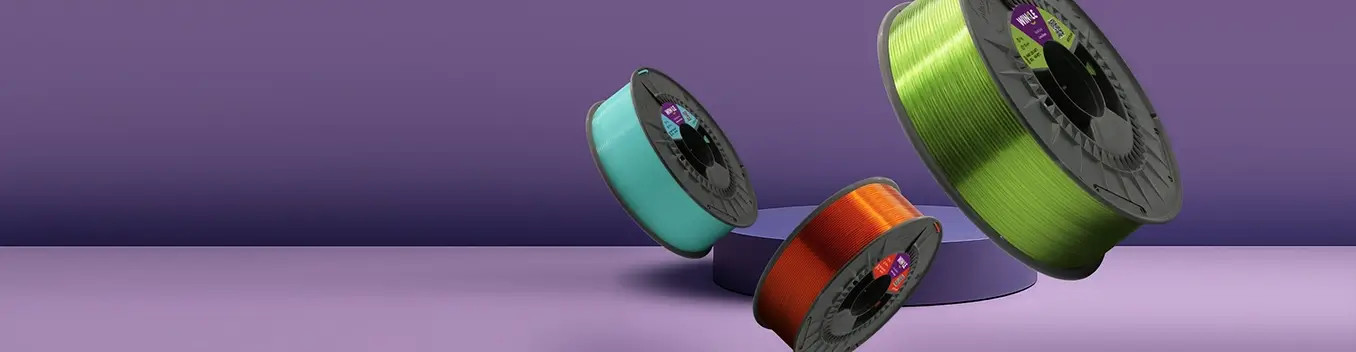
PETG filament is a popular material used in FDM and FFF 3D printing for producing strong, durable, and functional parts. PETG stands for Polyethylene Terephthalate Glycol, a thermoplastic polymer that combines the strength of ABS with the ease of printing often associated with PLA.
Because of its balanced mechanical properties, PETG filament for 3D printers is widely used for functional prototypes, mechanical components, and parts that require durability and chemical resistance.
Compared with many other 3D printing filaments, PETG offers excellent layer adhesion, moderate flexibility, and strong resistance to impact and moisture. This makes it a reliable choice for both professional and hobbyist 3D printing applications.
When to Use PETG Filament?
When PETG may not be the best choice:
PETG filament is a modified version of PET plastic designed specifically for 3D printing with FDM printers. During the printing process, the PETG 3D filament is heated and extruded through a nozzle to build objects layer by layer.
The addition of glycol in PETG improves the material’s clarity, durability, and resistance to cracking compared with standard PET plastics.
PETG has become one of the most common 3D printer filaments because it provides a balance between strength, printability, and reliability.
PETG is valued for its mechanical strength and consistent printing behavior. The following table summarizes the typical properties of PETG printer filament.
These characteristics make PETG 3D printing filament suitable for parts that need durability while still being relatively easy to print.
PETG filament is widely used in both professional and hobbyist 3D printing environments.
Because PETG combines strength with moderate flexibility, it performs well in parts that experience mechanical stress or repeated use.
When choosing a 3D printing material, PETG is often compared with PLA and ABS. Each filament offers different advantages depending on the application.
PETG is often considered a balanced option between PLA and ABS, offering stronger mechanical properties than PLA while being easier to print than ABS.